Epd Or Et Stock. Yahoo finance will soon be upgrading our conversations message board platform to provide a. Their epd share price forecasts range from $27.00 to.
EPD Stock Price and Chart — NYSEEPD — TradingView from www.tradingview.com The various types and varieties of Stocks
Stock is an ownership unit of an organization. A stock share is just a fraction or all of the shares in the corporation. Stocks are available through an investment company or you can buy shares of stock by yourself. Stocks can be used for many purposes and their value fluctuates. Some stocks can be cyclical, others non-cyclical.
Common stocks
Common stock is a kind of ownership in equity owned by corporations. These are typically issued as ordinary shares or voting shares. Ordinary shares are also referred to as equity shares in the United States. Common names for equity shares can also be used by Commonwealth nations. They are the most basic form of equity owned by corporations and the most commonly owned stock.
Common stocks are quite similar to preferred stocks. The only distinction is that preferred shares have voting rights, but common shares do not. While preferred stocks pay lower dividends, they do not permit shareholders to vote. They will decline in value when interest rates increase. However, rates that fall can cause them to rise in value.
Common stocks also have greater appreciation potential than other types. They do not have fixed rates of return and are therefore much less expensive as debt instruments. Common stocks are also exempt from interest which is an important advantage over debt instruments. Common stocks can be the ideal way of earning greater profits, and also being an integral element of a company's success.
Preferred stocks
Investments in preferred stocks offer higher dividend yields than typical stocks. But like any type of investment, they're not completely risk-free. You must diversify your portfolio to include other securities. To achieve this, you should buy preferred stocks through ETFs or mutual funds.
Most preferred stocks don't have a maturity date however they can be purchased or called by the company issuing them. Most cases, the call date for preferred stocks is around five years after the issuance date. This combination of bonds and stocks can be a good investment. As a bond, preferred stocks pay dividends on a regular schedule. Furthermore, preferred stocks come with set payment dates.
Preferred stocks offer companies an alternative source to financing. A good example is pension-led finance. Additionally, certain companies are able to delay dividend payments, without harming their credit ratings. This gives companies greater flexibility and permits them to pay dividends if they have the ability to generate cash. These stocks do come with the possibility of interest rates.
Non-cyclical stocks
A stock that is not the case means that it doesn't see significant changes in its value due to economic conditions. They are typically found in industries that offer the goods and services consumers need continuously. Their value increases in time due to this. Tyson Foods, for example, sells many meats. Consumer demand for these kinds of items is always high, which makes them a good choice for investors. Utility companies are another example of a noncyclical stock. They are stable, predictable, and have a higher turnover of shares.
Trustworthiness is another important consideration in the case of stocks that are not cyclical. A high rate of customer satisfaction is generally the most desirable options for investors. Although companies can appear to have high ratings, feedback is often misleading and some customers might not get the best service. It is essential to focus on the customer experience and their satisfaction.
People who don't want to be being exposed to unpredictable economic cycles can make great investment opportunities in stocks that aren't subject to cyclical fluctuations. Non-cyclical stocks even though prices for stocks fluctuate quite a lot, outperform all other kinds of stocks. They are often described as defensive stocks because they protect against negative economic impact. Non-cyclical securities are a great way to diversify a portfolio and earn steady income regardless of how the economy is performing.
IPOs
IPOs, or shares which are offered by a company to raise funds, are a form of stock offerings. These shares are made accessible to investors on a predetermined date. Investors who want to purchase these shares must fill out an application. The company decides on the amount of funds it requires and then allocates the shares in accordance with that.
IPOs can be risky investments that require care in the details. Before you make a decision on whether or not to invest in an IPO, it is essential to take a close look at the company's management, the quality and details of the underwriters, as well as the terms of the agreement. A successful IPOs are usually backed by the backing of major investment banks. There are however risks associated with investing in IPOs.
A IPO is a method for businesses to raise huge amounts of capital. It also lets it become more transparent, which increases credibility and gives lenders more confidence in the financial statements of the company. This can lead to reduced borrowing costs. A IPO is a reward for shareholders in the business. Investors who were part of the IPO are now able to sell their shares on the secondary market. This will stabilize the price of shares.
In order to raise funds through an IPO the company must satisfy the requirements for listing of the SEC (the stock exchange) as well as the SEC. Once this step is complete then the company can launch the IPO. The final step of underwriting is to create an investment bank consortium, broker-dealers, and other financial institutions in a position to buy the shares.
Classification of companies
There are many different methods to classify publicly traded companies. Stocks are the most commonly used method to classify publicly traded companies. There are two choices for shares: common or preferred. There are two main differentiators between them: the number of voting rights each share comes with. The former permits shareholders to vote at company meetings, whereas shareholders are allowed to vote on specific aspects.
Another option is to categorize firms based on their sector. Investors looking to identify the most lucrative opportunities in specific industries or sectors could benefit from this method. There are numerous aspects that determine if a company belongs in the same area. For example, if a company suffers a dramatic decline in its price, it can impact the stock prices of other companies within its sector.
The Global Industry Classification Standard (GICS) and the International Classification Benchmark (ICB) classification systems classify companies according to the items they manufacture and the services they provide. For example, businesses operating in the energy sector are classified under the group called energy industry. Oil and gas companies are included under the oil and gas drilling sub-industry.
Common stock's voting rights
In the last few years, there have been several discussions regarding common stock's vote rights. There are many reasons a business could give its shareholders the right to vote. This has led to several bills being introduced by both the House of Representatives as well as the Senate.
The number of shares outstanding determines how many votes a company holds. One vote is given to 100 million shares outstanding if there are more than 100 million shares. However, if a company has a higher quantity of shares than the authorized number, the voting capacity of each class is greater. This means that the company is able to issue additional shares.
Preemptive rights are also possible when you own common stock. These rights allow holders to retain a certain percentage of the stock. These rights are crucial as a corporation may issue additional shares and shareholders might want to purchase new shares to protect their ownership. Common stock isn't an assurance of dividends and corporations are not obliged by shareholders to pay dividends.
The stock market is a great investment
A portfolio of stocks can offer greater returns than a savings accounts. Stocks allow you to buy shares of a company and could yield huge dividends if the business is successful. They also let you increase the value of your investment. If you own shares of the company, you are able to sell them at a higher price in the future while still getting the same amount that you originally invested.
Stocks investment comes with risk. The appropriate level of risk for your investment will depend on your level of tolerance and the time frame you choose to invest. The most aggressive investors seek for the highest returns, while conservative investors seek to safeguard their capital. Moderate investors seek a steady and high rate of return over a longer time, but aren't comfortable placing their entire portfolio in danger. Even a prudent approach to investing could result in losses. Before you begin investing in stocks, it's essential to establish the level of confidence you have.
Once you know your tolerance to risk, it's feasible to invest small amounts. You can also look into different brokers to determine which best suits your needs. A reliable discount broker must offer tools and educational materials. Some may even offer robot advisory services that can assist you in making an informed choice. The requirement for deposit minimums that are low is the norm for certain discount brokers. Many also provide mobile apps. It is essential to verify all fees and requirements prior to making any final decisions about the broker.
Find the latest enterprise products partners l.p. (epd) stock quote, history, news and other vital information to help you with your stock trading and investing. The enterprise products partners stock price gained 0.0800% on the last trading day (friday, 21st oct 2022), rising from $24.99.
A Value Greater Than 1, In General, Is Not As Good (Overvalued To Its Growth Rate).
8111 westchester dr ste 600 dallas, tx. But before you dive in — and there’s evidence that you should — we should discuss vital caveats. Real time enterprise products partners (epd) stock price quote, stock graph, news & analysis.
Currently, Ownership Of Epd Stock Entitles You To A 6.4% Dividend Yield.
This report compares the performances of enterprise products partners l.p. Epd description — enterprise products partners l.p. After reading this report, you will learn the differences in.
Price As Of October 21, 2022, 3:00 P.m.
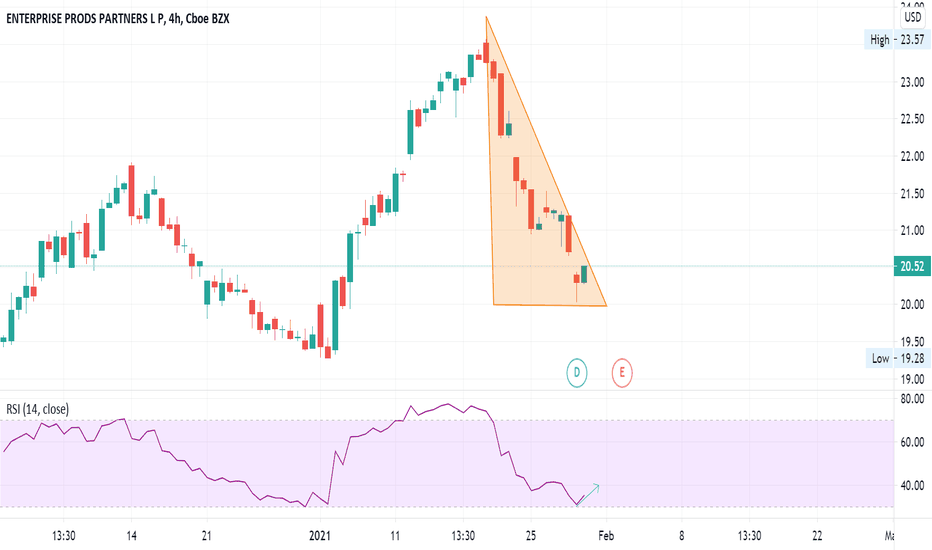
Epd appears to be bouncing off the bottom tl with a bullish engulfing candle appearing today. Enterprise products partners industry comparisons. Energy transfer lp provides natural gas pipeline.
(Epd) And Energy Transfer Lp (Et) Stocks.
Long entry with a stop loss right below bearish candle low from 5/3 at $22.77. (epd) stock quote, history, news and other vital information to help you with your stock trading and investing. Yahoo finance will soon be upgrading our conversations message board platform to provide a.
Epd’s 1.12X Forward Price/Sales Is 25% Lower Than The 1.49X Industry Average.
Compare fundamental and technical ratings. Their epd share price forecasts range from $27.00 to. For example, a company with a p/e ratio of 25 and a growth rate of 20% would have a peg ratio of.
Post a Comment for "Epd Or Et Stock"